Researchers have developed polyurethane foam that is more sustainable and recyclable
2022-12-06
A research team at the Center for Polymer Education and Research (CERM) at the University of Liege in Belgium has developed an innovative process that reconsiders the manufacture of polyurethane (PU) foam without the use of isocyanates (highly toxic substances), while allowing the foam to be recycled.
Polyurethane (PU) foam is an indispensable product in our daily life. Rigid polyurethane foam has played an important role in energy conservation for decades when it is used in the construction industry (e.g. floor, wall and roof insulation in buildings) or as the most effective insulation panels in household items such as refrigerators (walls and doors). Flexible polyurethane foam is used as a comfort material for mattresses, sofas, armchairs, car seats, etc. It can also be used for sound insulation and shock protection.
Although inexpensive, these materials are made from toxic compounds and are difficult to recycle. "Polyurethane foams are prepared from isocyanates, which are highly reactive and toxic chemicals," explains Christophe Detrembleur, director of FNRS research at the Center for Polymer Education and Research (CERM) at the University of Liege.
Replacing this traditional chemical process with a more environmentally friendly and healthy one, while using a signature waste (carbon dioxide) as a feedstock, has become a top priority in the production of more ecological and recyclable porous materials.
At the same time, faced with regulatory changes restricting the use of isocyanates, the production of polyurethane foams must be changed. Researchers at the University of Liege have developed a new process, which may be compatible with existing industrial foaming infrastructure, to prepare isocyanate-free and recyclable polyurethane (NIPU) foam with a foaming agent prepared with water.
Maxime Bourguignon, a researcher at the lab and lead author of the paper, said: "We have successfully imitates the foaming technology of conventional polyurethanes by replacing the toxic isocyanate with readily available cyclic carbonate compounds. Our technique uses water and a catalyst to convert part of the annular carbonate into a gas (carbon dioxide), which is blown out into the substrate, while another part simultaneously reacts with an amine to solidify the foam. The result is a solid material with low density and regular pores. Our cyclic carbonic acid is easily obtained through the chemical conversion of carbon dioxide, which does double duty, producing a foaming agent and forming a polyurethane polymer matrix."
With its simplicity, modularity and ease of implementation, low cost of use and very wide range of product applications, the technology provides a new impetus for the production of the next generation of more sustainable polyurethane foams.
Polyurethane (PU) foam is an indispensable product in our daily life. Rigid polyurethane foam has played an important role in energy conservation for decades when it is used in the construction industry (e.g. floor, wall and roof insulation in buildings) or as the most effective insulation panels in household items such as refrigerators (walls and doors). Flexible polyurethane foam is used as a comfort material for mattresses, sofas, armchairs, car seats, etc. It can also be used for sound insulation and shock protection.
Although inexpensive, these materials are made from toxic compounds and are difficult to recycle. "Polyurethane foams are prepared from isocyanates, which are highly reactive and toxic chemicals," explains Christophe Detrembleur, director of FNRS research at the Center for Polymer Education and Research (CERM) at the University of Liege.
Replacing this traditional chemical process with a more environmentally friendly and healthy one, while using a signature waste (carbon dioxide) as a feedstock, has become a top priority in the production of more ecological and recyclable porous materials.
At the same time, faced with regulatory changes restricting the use of isocyanates, the production of polyurethane foams must be changed. Researchers at the University of Liege have developed a new process, which may be compatible with existing industrial foaming infrastructure, to prepare isocyanate-free and recyclable polyurethane (NIPU) foam with a foaming agent prepared with water.
Maxime Bourguignon, a researcher at the lab and lead author of the paper, said: "We have successfully imitates the foaming technology of conventional polyurethanes by replacing the toxic isocyanate with readily available cyclic carbonate compounds. Our technique uses water and a catalyst to convert part of the annular carbonate into a gas (carbon dioxide), which is blown out into the substrate, while another part simultaneously reacts with an amine to solidify the foam. The result is a solid material with low density and regular pores. Our cyclic carbonic acid is easily obtained through the chemical conversion of carbon dioxide, which does double duty, producing a foaming agent and forming a polyurethane polymer matrix."
With its simplicity, modularity and ease of implementation, low cost of use and very wide range of product applications, the technology provides a new impetus for the production of the next generation of more sustainable polyurethane foams.
Our country developed from polyurethane power to powerful country
Related Article
The Journey, the 2022 Qatar World Cup ball, is lighter than the ball used in previous World Cups, allowing it to maintain a faster speed through the air.
The fastest World Cup ball, Journey, is made of a textured polyurethane spherical material called SPEEDSHELL
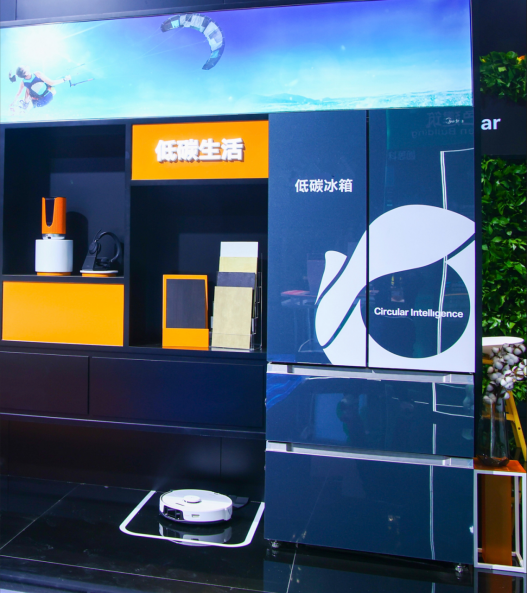
A low-carbon green refrigerator jointly launched by materials manufacturer Coxtron and global home appliance brand Midea Group is on display at Coxtron's booth at the 5th China International Import Expo 2022. The refrigerator is insulated with a low carbon footprint polyurethane based on the mass balance method. Through cooperation, the two sides are committed to accelerating the low-carbon transformation of home appliance manufacturing and bringing low-carbon home appliances to more households.
Cosco and Midea refrigerator: Let low-carbon polyurethane products into more families